Showing posts with label risotto. Show all posts

Tuesday, 24 May 2016

'Dirty' Risotto


Dirty rice is a traditional Cajun dish where the white rice gets a "dirty" colour from being cooked with small pieces of chicken liver or giblets, (bell) pepper, celery, onion (the so-called Cajun Holy Trinity of ingredients and spices. Most common in the Cajun regions of southern Louisiana and Mississippi it can apparently also be found in other areas of the American South.

I’ve never had Dirty Rice so I don’t know if this recipe, adapted from one by Giada De Laurentiis (an Italian American TV chef whose culinary work is as oft criticised as lauded - as is often the case with ‘celebrity’ chefs it would seem) tastes like it. It appealed to me though: risotto (natch) with lots of meaty and savoury elements. Heart, oozy, and basically very tasty.


‘Dirty’ Risotto
serves 3


750ml chicken stock
15g butter
190g Italian sausage, removed from skin & crumbled
85g pancetta cubes
1 shallot, finely chopped
1 clove garlic, minced
½ orange bell pepper, diced
1-2 tbsps jalapenos (from a tin), de-seeded & finely chopped
75g mushrooms, roughly chopped
salt and pepper, to taste
150g Arborio rice
90ml dry vermouth
25g Parmesan cheese + extra to serve
1-2 tbsp chopped fresh parsley


In a small pan, heat chicken stock to a simmer and turn right down to keep warm.

Meanwhile melt the butter in a large saucepan and when it starts to foam brown the sausage meat and pancetta over a medium-high heat, breaking the sausage down so it resembles coarse mince.


When nicely browned and starting to caramelise add the vegetables, turn the heat down and cook over a low heat until the veg has softened.


Turn the heat back up to medium high, stir in the rice and keep stirring for a minute to allow the rice to lightly toast.


Turn the heat up to high and pour in the vermouth: it will bubble up angrily - keep stirring until it has almost absorbed. Turn the heat back down again to medium-low.

Add a ladleful of stock to the rice and stir occasionally until it has absorbed. Repeat, a ladleful at a time, ensuring each is almost absorbed before adding the next.

Once the rice is tender and the texture of the risotto is quite gloopy, turn off heat and stir in the cheese. Cover and leave off the heat for 5 minutes then stir in the parsley.

Serve with a rocket & cherry tomato salad on the side and a little parmesan and parsley scattered over.


Read More »

Tuesday, 6 October 2015

Roasted Artichoke Risotto


I’d eaten a ridiculous amount of red meat in the weeks preceding this, in fact the week before, when the bf was away I think every evening meal I’d had was mince of one description or another. By this point then I was craving vegetables. We started the new week off with the mushroom ragout as previously posted but that wasn’t enough.

So I decided on a risotto. Killing two birds with one stone really: my continued point-proving that actually yes, we eat a reasonable amount of risotto plus it is something that is dead simple to have as part of a meatless meal. You choose your vegetable(s) and how to prepare them then add to a basic risotto bianco.

Couldn’t be easier really.


Roasted Artichoke Risotto
serves 2


500ml chicken (or vegetable) stock (you may not need all of it)
2 tsp olive oil
1 small knob of butter
1 small onion, peeled and finely chopped
1 clove of garlic, peeled and finely chopped
1 stick of celery, trimmed and finely chopped
150g risotto rice
85ml of vermouth (or dry white wine)
sea salt & freshly ground black pepper
20 g butter
35g Parmesan cheese, grated + extra to serve
1 tin artichoke hearts in brine, rinsed, drained and roughly chopped
zest and juice of ½ lemon
small handful mint, finely chopped
extra virgin olive oil


Preheat the oven to 200C.

Lay the artichoke heart pieces on a baking tray and drizzle with a little olive oil. Toss around to coat the artichokes and then pop in the oven to roast for around 30 minutes until slightly criosp and charred on the outside and creamy in the middle.


Meanwhile put the hot stock in a saucepan on a low heat to keep warm on the hob.

Put 2 teaspoons of olive oil and the butter into a separate pan and add the onion, garlic, celery and a little pinch of salt. Cook over a very low heat, very gently for 15-20 minutes until the vegetables have softened but not coloured.

Turn up the heat and add the rice, stirring around for a couple of minutes until the rice is toasted . Pour in the vermouth which will bubble up madly so keep stirring until it has cooked into the rice.

Add your first ladle of hot stock. Turn the heat down to a simmer and stir occasionally until the stock is absorbed: keep repeating with additional ladlefuls of stock, only adding another when the previous has been absorbed into the rice. You don’t need to stir constantly, but reasonably often as this massages the starch out of the rice and will result in a creamy risotto.

You are done when the rice is soft but with a slight bite: this can take anything from 15 to 30 minutes in my experience. If you run out of stock (which is unlikely) add some boiling water.

Remove from the heat and add half of the artichokes, the butter, lemon juice and Parmesan. Stir well. Place a lid on the pan and allow to sit for 2 minute so that the risotto becomes creamy and oozy.

Toss the remaining artichokes with most of the lemon zest, the chopped mint and a drizzle of olive oil.

Carefully check the risotto seasoning and then divide it between two plates or wide bowls and sprinkle the dressed artichokes on top. Serve sprinkled with a little extra Parmesan and the rest of the lemon zest.


Read More »

Tuesday, 20 January 2015

Butternut Squash, Bacon & Sage Risotto


The bf is under the impression that we hardly ever have risotto. Of course he is wrong, he just never remembers what I cook (I like to tell myself that is because he eats so well at home but who knows: it can be slightly annoying) but whatever, I was feeling nice so promised that we would have risotto the following week.

We had half a butternut squash in the fridge to use up so my first instinct was to have a BNS & sage risotto and then I thought of adding some bacon into the mix. Because a) what doesn’t taste better with the addition of bacon and b) it’s pork so must go well with the sage too, right?

In an effort to lighten it up slightly I added a tablespoon of light mascarpone for that end-of-risotto-cooking creaminess that stirring in a big knob of butter usually accomplishes. As ever with my efforts to lighten up it smacks slightly of bolting the stable door after the horse has legged it - after all this is risotto we’re talking about. With bacon.


Butternut Squash, Bacon & Sage Risotto
serves 2


4 rashers smoked bacon, chopped
½ medium onion, finely chopped
450ml pork (or chicken or veg) stock
1 garlic clove, crushed
150g Arborio rice
85ml vermouth (or dry white wine)
freshly grated nutmeg
freshly ground black pepper
350g butternut squash, peeled and cut into ½ in dice
3 sage leaves, finely chopped (plus extra leaves for garnish)
25g grated parmesan cheese
1½ tbsp light mascarpone


Put the stock in a small saucepan & set over very low heat.

In a large sauce pan cook the bacon over medium heat until just getting crispy, about 10 minutes. Remove with a slotted spoon to kitchen paper to drain.

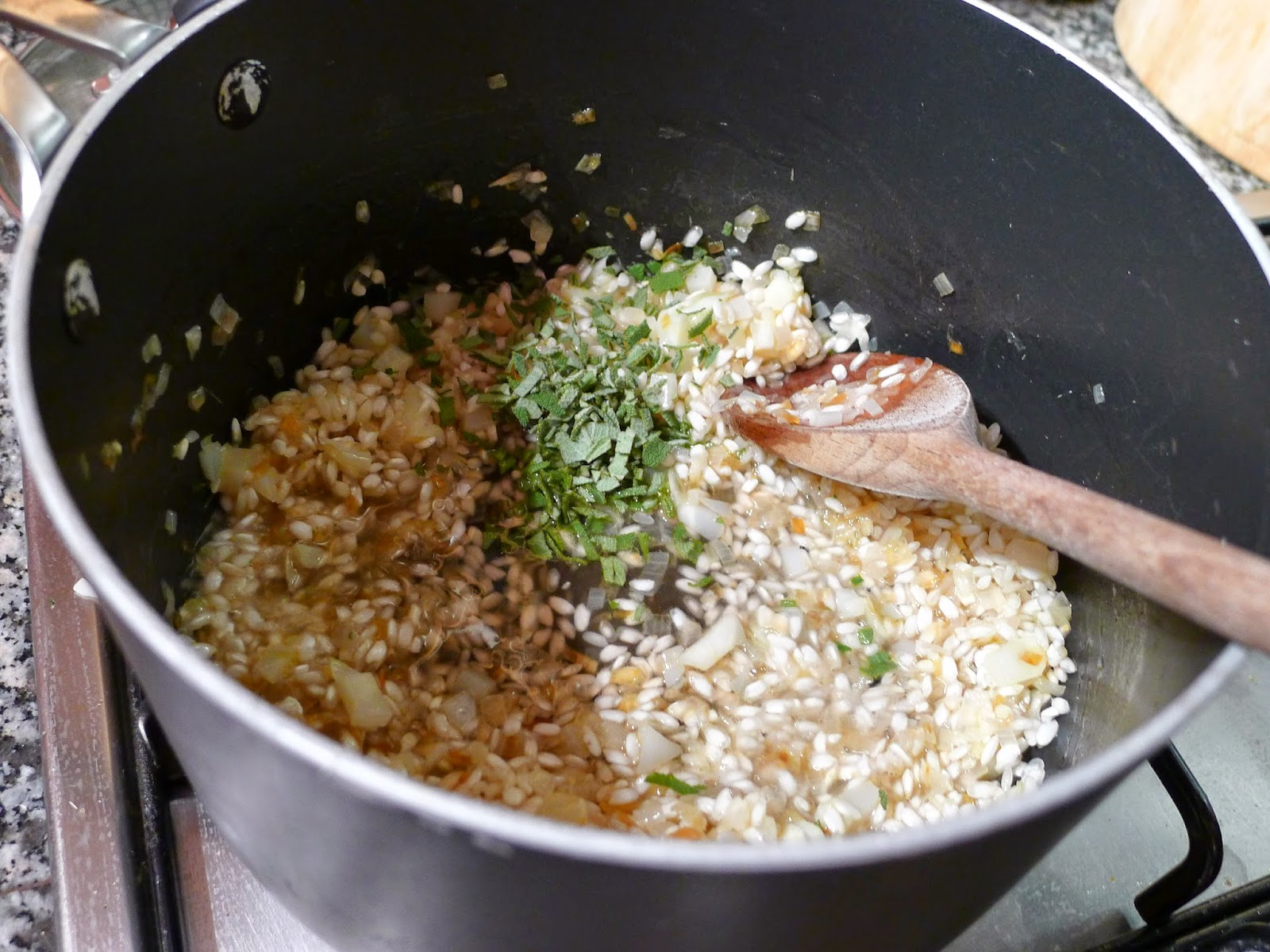
Drain off all but 1½ tsp of the bacon fat and add the onions, chopped sage and BNS and gently sauté until the onions are caramelising and the squash is starting to be tender, about 10 minutes. Add in the garlic and a grind of nutmeg and sauté until fragrant, another 30 seconds.

Add the rice and stir around for 3 or so minutes so coated in the onion mixture and toasted without colouring.


Turn the heat up a little and add the the wine, add it and let bubble down until reduced. Reduce the heat again.

Then add 1 ladle of stock and stir occasionally until absorbed. Repeat with a ladleful at a time until the rice is al-dente, stirring well after each addition.

Check occasionally to see if the rice is ready (you may not use all the stock) – it should be soft with a bit of chew in the middle – and the consistency fluid. When it is done, season with pepper.

Take the pan off the heat. Add a splash of the stock to keep the risotto moist, stir in half the bacon, half the Parmesan, and the mascarpone. pop the lid on and let the risotto sit for 3-4 mins to rest.


Meanwhile, add a tsp of oil to a small frying pan over a medium heat. Add the sage leaves, then fry for a few secs until starting to colour. Transfer to kitchen paper with a slotted spoon to drain. Spoon the risotto into bowls, then scatter over the rest of the bacon, the remaining Parmesan and the crisp sage leaves.


Read More »

Monday, 24 November 2014

Osso Buco & Risotto Milanese


Osso buco means "bones with holes” or “hollow bones" and probably why it is never translated as such on even the most anglified of menus. It could be argued that slow-braised veal would certainly sound more appetising and perhaps even more accurate but the fact is that the bones , full of rich, delicious marrow rather than actually being hollow are the dish's crowning glory. And if you don’t fancy just gulping that marrow down solo then mix it in with the sauce and/or rice: you won’t get squeamed out but you will get the deliciousness.

The best-known version of course hails from Milan, where it is generally served with a vivid yellow saffron risotto Milanese. Most of the recipes I look at claim to be for 'ossibuchi alla milanese', yet seem to vary hugely. But I think this, using the most-oft cited ingredients and techniques is pretty traditional.

The risotto milanese, if perfectly traditional would also have bone marrow cooked into it but the richness of the osso bucco with the marrow from the shin bones is probably enough

I’ve wanted to make osso busso for ever. Well at least since I ate a plate of it in a ridiculously half kitsch, half grungy trattoria type place in otherwise swish Milan. I nearly swooned at the first mouthful and have thought of it often. I’ve been braving Borough Market more frequently recently and so thought I would finally buy some veal shins and cook this as soon as possible. So here it is.

A couple of things to note: firstly beware saffron bought in say, Morocco, that you presume to be real. Saffron should make the risotto milanese a vivid yellow, not the weird orangey pink as can be seen here. And do make the effort to whip up a little gremolata if you can to sprinkle over the finished dish. It will really make the flavours sing.


Osso Buco
serves 2


1 tbsp olive oil
2 thick slices of veal shin, including the bone
20g butter
1 onion, finely chopped
1 carrot, finely chopped
1 celery stick, finely chopped
1 clove garlic, finely chopped
2 tomatoes, peeled & deseeded & finely chopped
1 strip lemon zest
100ml white wine
200ml chicken stock
sprig of rosemary
2 bay leaves
15g flour
grated nutmeg
salt & pepper
For the gremolata (serves 4)
½ unwaxed lemon, zest finely grated
1 small garlic clove, very finely chopped
1 tbsp flat-leaf parsley, finely chopped
pinch of sea salt


Mix the nutmeg and salt & pepper into the flour and dust over the veal shins on both sides.


Heat the oil in a heavy based casserole over a medium heat and then fry the shins until golden on both sides.Remove and set aside.


Reduce the heat to low, add the butter to the pan and lightly fry the onion, garlic, celery and carrot with a small pinch of salt until softened but not coloured. Add the tomatoes and cook for a minute or so more.


Pour in the wine and deglaze the casserole, making sure to scrape up all struck on bits.

Reduce the wine by about half and then put the veal back in the pan along with the herbs and lemon rind and enough stock to just cover the meat.


Cover the pan with a lid and simmer gently for 1½-2 hours until very tender, turning the meat every half hour or so. Keep an eye on the stock level as you will want a thick but abundant sauce so add a little more stock as necessary.

Gently brush most of the vegetable bits off the shanks and with a flat spatula or fish slice carefully transfer the veal shanks to a dish. Strain the pan juices through a medium-mesh sieve into a saucepan, pressing hard on the solids with a spatula to extract as much sauce as you can.

Bring the sauce to a simmer and if necessary add a little cornflour mixed with a splash of water to thicken.

Serve the veal shins over some risotto milanese with the sauce poured over and some gremolata sprinkled over eveything.


Risotto Milanese
serves 2


40g butter
600ml hot chicken stock
1 small onion or a banana shallot, finely chopped
120g arborio rice
75ml white wine
1 tsp saffron
30g parmesan


Melt half the butter in a sauce pan then gently cook the onion over a medium heat for 5-10 minutes until very soft but not coloured.

Turn the heat up a little and add the rice. Stir around for a minute or so until the rice is lightly toasted and coated with buttery onion then tip in the wine. Let this bubble up and absorb and reduce then crumble in the saffron.

Add the stock a ladleful at a time stirring often. Let each ladleful of stock get soaked up by the rice before adding the next.

This should take about 20 minutes: you want tender rice with the faintest amount of bite. Stir in the remaining butter and check for seasoning before stirring in the parmesan. You want the risotto to be quite oozy.

Let sit covered and off the heat for a few minutes before serving with the osso buco and gremolata.


Read More »

Wednesday, 30 July 2014

Roasted Cauliflower, Sage & Almond Risotto


It’s odd how many Australian chefs I come across when I trawl the web looking for new inspiration. This is a recipe from one that I don’t think I was aware of: Donna Hay and very glad to come across it I am as it is absolutely terrific: gorgeously oozy risotto with nuttiness from the roast cauliflower and almonds and offset by a hint of bitterness from the sage.

It could well be one of my very favourites now. But lets face it I do have quite a lot of those.

Personally I think the addition of sherry gives it a slightly Spanish edge so if you can get Marcona almonds all the better. As it turned out the the almonds I had in the cupboard had gone rancid so I had to use almond flakes rather than chopped.


I’ve not written it into the recipe but a tip is that rather than throw the cauliflower stalks away when trimming the cauliflower into florets, chop them up finely and throw in with the shallots when you are sweating them: it gives an extra flavour dimension to the risotto, different from the roasted cauliflower topping.

You can use other any other soft cheese that will melt well such as taleggio, or perhaps in keeping with the Spanish angle try and source a Brie-style cheese from there.


Roasted Cauliflower, Sage & Almond Risotto
serves 2


250g cauliflower, trimmed and chopped
1 tbsp olive oil
sea salt and freshly ground black pepper
20g almond flakes
½ bunch sage, leaves picked
750ml hot chicken stock
30g butter
2 banana shallots, finely chopped
150g arborio rice
60ml dry sherry
20g finely grated parmesan
50g Brie de Meaux, sliced


Preheat oven to 220°C.

Place the cauliflower, oil, salt and pepper on a baking tray and toss to coat. Roast for 15 minutes then add the almonds and half the sage leaves and roast for a further 5–8 minutes or until golden and crisp. Set aside and keep warm.


Meanwhile place the stock in a saucepan over a low heat to keep warm.

Melt the butter in a separate large saucepan over medium heat. Add the shallot and cook gently for 10 minutes or until soft and translucent.

Turn the heat up a little and tip in the rice. Stir around to coat for a minute or so before adding the sherry. Finely chop the remaining sage and throw that in too.


Cook, stirring, for 1–2 minutes or until the sherry is absorbed.

Gradually add the stock, 1 ladleful at a time. Allow the stock to be absorbed before adding the next ladleful.

Stir often but don’t worry about standing and stirring continuously until the stock is absorbed and rice is al dente. Probably between 20 and 30 minutes.

Stir through parmesan, and season carefully.

Cover, remove from the heat and leave to stand for 5 minutes before spooning into serving bowls. Top with Brie slices and the roasted cauliflower, sage & nuts to serve.


Read More »

Monday, 21 April 2014

Asparagus, Mint & Lemon Risotto


This is pretty much a Jamie Oliver recipe really - you can find the original here: I think my only real adaptation was to add the fried prosciutto as a garnish, the salty savouriness worked pretty well.

Jamie’s idea of finely slicing the risotto lengths into little discs and keeping the tips whole is a good one: it gives a really good asparagus flavour to the risotto itself and of course you will get a delicious whole tip in (nearly) every bite.

Anyway, this is one of my favourite risotto recipes so give it a try.


Asparagus, Mint & Lemon Risotto
Serves 2


For the risotto base
250ml vegetable stock
½ tbsp olive oil
1 shallot, peeled and finely chopped
1 stick celery, trimmed and finely chopped
150 g risotto rice
65 ml vermouth
For the risotto
100g asparagus, finely chopped up until the tips
250 ml vegetable stock
12.5g butter
1 small handful Parmesan cheese, freshly grated, plus a block for grating
handful fresh mint, leaves picked and finely chopped
zest and juice of 1/2 lemon
sea salt
freshly ground black pepper
extra virgin olive oil
2 slices of prosciutto, lightly fried, to serve

Bring the stock to a low simmer in a small saucepan.

In a separate large pan cook the shallot and celery very gently until soft but not coloured in the olive oil. About 15 minutes.

Add the rice and turn up the heat. Stir constantly for a couple of minutes so that the rice or vegetables don’t catch and then quickly pour in the vermouth. Keep stirring until the vermouth has evaporated.

Turn the heat down to medium-low (as you cook you will need to adjust this as necessary: you don’t want the rice to cook too quickly so that it has a stodgy outside but uncooked middle, nor too slowly or it will become a stodgy but gloopy mess).

Add a ladleful of stock to the rice. Stir often (but you don’t need to be a slave to it) until the liquid has been fully absorbed before adding the next ladleful.

Continue to add ladlefuls of stock until it has all be absorbed and the rice has begun to soften but is still al dente. This can be anywhere from 15-30 minutes so towards the end of the cooking time you’ll need to be a bit vigilant. You may also need some more stock.

Put a large saucepan on a medium to high heat and pour in half the stock, the risotto base and the finely sliced asparagus stalks and the tips.

Stir constantly and gently bring to the boil, then turn the heat down and simmer until almost all the stock has been absorbed.

Add the rest of the stock a ladleful at a time until the rice and asparagus are cooked. Check the rice often - you don’t want to overcook it so it should hold its shape but be soft and creamy and the whole kind of oozy.

Turn off the heat and quickly stir in the butter, Parmesan, mint, lemon juice and most of the lemon zest. Check the seasoning carefully and adjust if necessary.

Put a lid on the pan and leave the risotto to rest for a few minutes. Meanwhile you can quickly fry off the prosciutto.

Serve the risotto in bowls with a slice of fried Prosciutto atop each, drizzle over a little olive oil and scatter with the remaining lemon zest.

Have some more Parmesan on the table so you can add more if you like.


Read More »

Thursday, 23 January 2014

Fennel, Goats' Cheese & Pea Risotto


I’ve mentioned before that there tends to be a bit of a lag with my cooking things and then blogging them. This recipe brought to home just how much of a lag as when I cooked this I recall that it was a lovely dish for a late summer evening. And here I am posting it in January. Oh well.

Pernod goes exceptionally well with fennel, as you would imagine as they both have an aniseed edge to their flavour and aroma. Luckily this is not enough to overpower the goat’s cheese (do try and get hold of this Capricorn cheese if you can, it’s from Somerset and it bloody rocks!) and the whole remains light yet comforting. Very, very tasty.

I adapted this recipe from one found here. In retrospect this is *quite* similar at first glance to another fennel risotto that I previously posted which may be one of the reasons I was drawn to it but really it is quite different in taste.


Fennel, Goats Cheese & Pea Risotto
serves 2

1 small onion - finely chopped
1 medium fennel bulb - halved then finely sliced (reserve the fronds)
150g risotto rice
4 tbsp pernod (60ml)
750ml hot vegetable stock
100g frozen peas
100g goats' cheese
½ lemon, juiced
40g butter
1 tbsp olive oil
sea salt & freshly ground black pepper


Melt half the butter along with the olive oil in a heavy pan then add the onions and fennel and saute over a low heat until soft but not coloured. This may take up to 20 minutes.


Turn the heat up a little and add the rice, stirring it around so all the grains get coated with the buttery vegetable juices.

Tip in the Pernod and let bubble down until all but evaporated.

Add the stock a ladleful at a time, stirring and letting the rice absorb each ladleful of stock before adding the next.

When the rice is nearly ready (remembering that when it is finished you still want it to have a little bite) add the peas & lemon juice.


When you have finished adding the stock and the rice is ready (as per the above), stir in the goats cheese and remaining butter.


Remove the pan from the heat, cover with a lid and set aside for five minutes.

Divide between 2 bowls and with the reserved fennel fronds.


Read More »

Monday, 28 October 2013

Baked Bacon & Mushroom Risotto


For years I’ve had it in mind to try out one of Delia’s baked risotto recipes and had a look at one of them recently but just didn’t fancy it at that moment in time in the end (it was a risotto carbonara if you are interested). 

I decided to go with the concept however and just devise something: fairly comforting yet at the same time not too calorific. As I’ve mentioned before, I had, at the time of cooking this, been doing the 5:2 diet thing for a few months (cooking and eating out so much can take its toll) but recently what with one thing and another I haven’t been very good. The week I made this I was back on it and on my “non-fast” days I wanted to be reasonably careful (I should point out I’ve not been very good since…!)

And for that, this recipe is great - surprising low calorie for days when you’re being “good” but still want yumminess. Not to mention good for days when you have better things to do than stand by the stove stirring..to be honest, that kind of is my “better thing to do” but I appreciate that for others it isn’t!


Baked Bacon & Mushroom Risotto
serves 2


2 medium rashers of unsmoked back bacon, chopped
100g mushrooms, sliced
5g dried porcini (soaked in 150ml boiling water for 15-20 minutes)
10 puffs low-fat cooking spray
1 medium banana shallot, finely chopped
175g risotto rice
150ml dry white wine
300ml vegetable stock
small bunch of parsley, finely chopped
25g parmesan, freshly grated
sea salt and freshly ground black pepper


Preheat the oven to 200C.

Fry the bacon in a small pan, in it’s own fat until it is crispy. Remove and set aside on a piece of kitchen towel.

Meanwhile heat a heavy casserole (that has a lid) on the hob and spray with the low-fat cooking spray. Add the chopped onions and cook quite gently for about 10 minutes until softened.

Add the sliced mushrooms, season with salt and pepper and fry for 5 minutes more.


Drain the porcini mushrooms, reserving the soaking liquor, chop them up finely and add to the pan with the fried fresh mushrooms.

Cook for a couple of minutes more then add the rice.


Stir well for a few minutes then turn up the heat and add wine. 

Let it simmer hard until reduced by about half before adding the porcini soaking liquid and stock.

Lower the heat and stir in the bacon. Give it a good stir, pop a lid on and then transfer the casserole to the preheated oven.


Cook for 20 minutes then gently stir in most of the parmesan.


Return to the oven and cook for a further 10 minutes, or until the risotto is soft and creamy.

Stir through the chopped parsley then place a clean tea towel over the pot and let rest for 5 minutes.


Serve with the remaining parmesan sprinkled over and crispy salad leaves and quartered baby plum tomatoes on the side.


Read More »