Sunday, 27 September 2015

Slow Cooker Boeuf Bourguignon


We’re going back a fair while here: back when I first got a slow cooker. I’d wanted one for ages, but I’d also wanted a pressure cooker and frankly we don’t have room for both. It was a tough call - I had done tons of research on both and I think deep down I kinda wanted a pressure cooker but but in the end plumped for the slow cooker for 2 reasons. The first being that winter was on the way so in theory I would be cooking lots of heart stews and the like (although as I’ve mentioned previously I’m almost as likely to cook a stew at the height of summer if that is what I fancy - the slow cooker will also be helpful then as the kitchen won’t get so hot!) and the second being that in my bun in the oven state at the time I thought it would be handy, closer to D day to knock up lots of one pot meals that we could just defrost and reheat once we were back from the hospital. And I’m happy to state that was exactly what we did.

But back to this - the question was what to do for our first meal? Well in all honesty it wasn’t that much of a competition as, to me, Boeuf Bourguignon seemed a pretty obvious choice. That said, I’d a few other ideas up my sleeve for the coming weeks and months.


Slow Cooker Boeuf Bourguignon
Serves 4


6 rashers unsmoked streaky bacon, sliced into thin strips
1kg beef shin, cut into 1-inch cubes, patted dry & seasoned with salt & pepper
300ml good red wine, divided
2 small/medium onions, thinly sliced
2 medium carrots, chopped
2 stalks celery, diced
2 cloves garlic, crushed
2 tsp tomato paste
2-3 sprigs fresh thyme
1 bay leaf
250ml chicken or beef stock, plus more if necessary
300g button mushrooms, thickly sliced (halve very small ones)
parsley, chopped
crusty bread


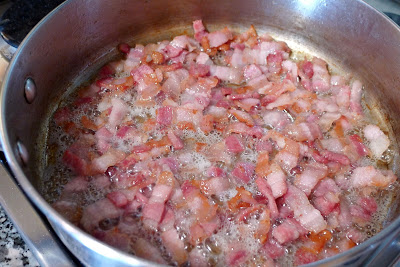
Warm a sauté pan over medium-high heat. Add the bacon and cook until the fat has rendered and the bacon is golden and crispy. Transfer the bacon using a slotted spoon to a plate lined with a paper towel to drain. Pour off all but a tablespoon of bacon fat from the pan, reserving the rest.

Return the pan to the heat and when the bacon fat is shimmering and you see a wisp or two of smoke, add a single layer of beef cubes to the pan to sear — do not crowd the pan; sear the meat in batches: you’ll probably do about 3 in all and add a little extra bacon fat as needed.


Transfer the seared meat to the slow cooker. When all the batches are done deglaze the pan with 50ml of the wine.


Pour the deglazing wine and any scraped up bits over the seared meat in the slow cooker.


Add 1 tablespoon of the leftover bacon fat (or olive oil if needs be) to the pan and reduce the heat to medium lowish. Cook the onions with ⅛ teaspoon of salt until soft and slightly browned, 6 to 8 minutes. Add the carrots and celery, and cook for a further 5 minutes or so until slightly softened.


Add the garlic and tomato paste, and cook until fragrant then transfer the vegetable mixture to the slow cooker.

Wipe the pan clean and warm a little more bacon fat over medium heat (using olive if no more remains). Cook the mushrooms with 1/4 teaspoon salt until they have release all their liquid, the liquid has evaporated, and the mushrooms are golden brown.


Transfer the mushrooms to a clean bowl, rather than the slow cooker, and set aside as they get added later.

Stir the beef and vegetables (excepting mushrooms) together in the slow cooker, tucking the sprigs of thyme and the bay leaf into the mixture. Pour the stock and the remaining wine over - the liquid should come about 3/4 of the way to the surface of the ingredients.


Cover and cook on low for 6 to 8 hours. When finished, the beef should fall apart easily with a fork.

Once the meat is cooked, stir in the reserved bacon and mushrooms. Cook with the slow cooker on high until the mushrooms are warmed through, about 10 minutes.


Serve in bowls with crusty bread on the side. Sprinkle with parsley before serving.


Read More »

Sunday, 13 September 2015

Lamb, Bulghur & Butter Bean Stew


Despite having thrown a little shade at Martha Stewart not that long ago it seems that I have found myself adapting one of her recipes: it is something I repinned onto my lamb recipe inspiration board and didn’t even realised it was Stewart until I decided to cook it the other day. It’s good though and dead easy so I’m glad I did.

You’ll have noticed that due to the lag of cooking / writing up blog I am totally out with my seasonal cooking and in the summer was posting a lot of stews, casseroles and the like. And recently I seem to have posted some lighter and more salady fare. The fact is though that I don’t often take much notice of what I should cook when - if I fancy quiche and salad in the dead of winter that is what I will have. And if I fancy a lamb & bulghur stew in August, as was this case with this recipe, then that is what I will bloody well have.

By the way, the original had oregano in it which I have omitted here simply as I forgot it. I didn’t miss it and in honesty I’m not sure it is necessary but if you do want to add it, do so at the stage where you stir in the spinach and feta: 1 tablespoon of fresh or 1 teaspoon of dried. 

I’d added olives to the recipe which I think was a good call as they added a nice salty tang to the finished dish: the feta does a similar job and they complement each other well so I’d probably add a little more of that sprinkled on top next time.


Lamb, Bulghur & Butter Bean Stew
serves 2


1 tbsp olive oil
1 shallot, finely chopped
200g lamb mince
75g bulghur wheat
½ tsp red-pepper flakes
coarse sea salt and freshly ground black pepper
½ tsp sweet paprika
1 tsp harissa paste
small tin chopped tomatoes
125ml water
½ tin white beans, drained & rinsed
5-10 kalamata olives, stoned and roughly chopped
75 g spinach, chopped
50g feta cheese, crumbled, plus a little extra to serve


Heat the oil in a heavy bottomed pot (that has a lid) over a medium heat and add the onion, lamb, bulgur wheat, red pepper flakes, ½ teaspoon salt, and ¼ teaspoon pepper. Cook, stirring to break up lamb, until the lamb is cooked which will take about 5 minutes.


Add the paprika and harissa, stirring for a minute until fragrant.


Add the tomatoes and water, bringing to a fierce simmer then turn the heat down to low and cover. Let the stew gently simmer, with the occasional stir, until the bulgur is tender, about 25 minutes.

Add the beans & olives at about 20 minutes in.


Once the bulgur is tender, stir in the spinach and feta and cook until feta is almost melted and the spinach wilted, about 2 minutes.


Serve in bowls garnished with a little extra feta if you like.


Read More »

Monday, 31 August 2015

Yellow Bean Chicken


There are many types of bean paste available in Chinese cooking: chilli bean paste for instance (made from broad beans) as well as, of course, black bean paste. This recipe uses the most common type of bean paste made from soy beans - sometimes called yellow bean (although it isn’t actually yellow) or fermented bean paste it can, confusingly be sweet, salty or hot making it important to know which you're getting!

This recipe is adapted from one in Ching’s Fast Food, with changed made to quantities as well as the velveting method.


Yellow Bean Chicken
serves 2-3


500g skinless chicken thigh fillets, trimmed of fat & sliced
1 tbsp groundnut oil
150g green beans, trimmed & cut in half
5 shiitake mushrooms, sliced
sea salt & freshly ground pepper
2 spring onions, finely chopped
For the marinade
2 cloves of garlic, crushed
2 tbsp Shaoxing rice wine
2 tbsp yellow bean paste
4 tbsp light soy sauce
2 tbsp runny honey
1 tbsp potato (or corn) flour
1 tbsp water


Mix together the marinade ingredients and the chicken in a bowl then cover with cling and set aside for around 20 minutes.


Heat a wok over high heat until it starts to smoke then add the oil and swirl around to coat the sides of the wok. Add the chicken (and marinade) and stirfry for 4 minutes and then add the beans and keep stirring around briskly for another minute.


Tip in the mushrooms and keep stirfrying for another couple of minutes.


Check the seasoning and adjust carefully to taste if necessary then sprinkle over the spring onions.


Serve immediately with plain rice.


Read More »

Wednesday, 19 August 2015

Lamb Rogan Josh


I’d been wanting to cook lamb Rogan Josh, one of my very favourite Indian dishes, for absolutely ages: and had been gathering recipes to do so for just as long. Many that I had sourced were very authentic but authenticity, as often happens, takes time and so I decided one evening to opt for a quicker, if perhaps not as “real” version. As such I’m not sure that this is particularly authentic at all and on top of that the yoghurt lightened it much more than I would have liked. It certainly tasted great though.

Apparently (so says Camellia Panjabi) “rogan” is Hindi for “red”, referring to the deep red colour using Kashmiri chillies (although see my comment regarding adding yoghurt as above) and “josh” means “fat”, referring to the fat which should melt out of the meat during braising. As well as the use of Kashmiri chillies this recipe also uses traditional rogan josh spices cardamom and fennel. If you can’t find Kashmiri chilli powder or the dried chillies themselves, you can use a standard chilli powder and add paprika to boost the red colour instead.


Lamb Rogan Josh
serves 2 generously


550g lamb leg (or shoulder), diced
1½ tbsp clarified butter (or ghee)
1 large onion, finely chopped
4 cloves garlic, peeled & roughly chopped
25g root ginger, peeled & roughly chopped
400g canned tomatoes
250ml water
100ml yoghurt, whisked
½ tsp sea salt
1 tbsp Kashmiri red chilli powder
½ tbsp ground coriander
½ tsp turmeric
½ tsp fennel seeds, ground
3 green cardamoms, lightly crushed
1 black cardamom, lightly crushed
½ tsp black peppercorns
3 cloves
1 bay leaf
½ blade of mace (optional)
¼ tsp turmeric


Fry the onions in the clarified butter in a large saute pan for about 20 minutes until lightly browned. Add the cloves, bay leaf, cardamom, peppercorns & mace & fry for 1 minute.


Then add the coriander, fennel, turmeric, chilli powder, paprika and coriander, frying for a minute or so more.


Throw in the meat and brown for about 5 minutes.


Blitz the tomatoes, garlic and ginger in a blender with a little water and add to the pan, cooking for a minute or so more.


Lower the heat to low and stir through the yoghurt.


Cook for a minute or two before pouring in the water and adding the salt.


Cook for about 2 hours until the meat is very tender removing any whole spices and the bay leaf and mace before serving with basmati rice.


Read More »

Wednesday, 12 August 2015

Cod Cakes in Tomato Sauce


I should do some sort of recipe census one day and see which chefs I tend to cook most of. I’m pretty sure that Yotam Ottolenghi would feature pretty highly up the list. Everything I’ve tried of his so far has been winner and there are many more I still want to try (braised eggs with lamb, venison stew and black pepper tofu all spring immediately to mind).

The Guardian website is a good source of his recipes and of course that was where I saw this one. These fishcakes are it seems, according to Ottolenghi “popular among Syrian Jews” being as they “capture much of the spirit of Sephardi food”. They are also delicious.


Cod Cakes in Tomato Sauce
serves 2


1½ slices good white bread, crusts removed
300g white fish fillet, skinless and boneless,
½ medium onion, peeled and finely chopped
2 garlic cloves, peeled and crushed
15g flat-leaf parsley, finely chopped
15g coriander, finely chopped
½ tbsp ground cumin
¾ tsp salt
1 large free-range egg, beaten
2 tbsp olive oil
For the tomato sauce
1 tbsp olive oil
¾ tsp ground cumin
¼ tsp sweet paprika
½ tsp ground coriander
½ medium onion, chopped
65ml white wine
200g tin chopped tomatoes
½ red chilli, deseeded and finely chopped
1 small garlic clove, crushed
1 tsp caster sugar
sea salt and black pepper


First make the tomato sauce. Heat the oil in a very large frying pan for which you have a lid and add the spices and onion. Cook for eight to 10 minutes, until completely soft, then add the wine and simmer for three minutes. Add the tomatoes, chilli, garlic, sugar, half a teaspoon of salt and some black pepper. Simmer for about 15 minutes, until quite thick, taste to adjust the seasoning and set aside.


While the sauce is cooking, make the fishcakes. Put the bread in a food processor and blitz to breadcrumbs. Chop the fish very finely and put in a bowl with the breadcrumbs and everything else but the olive oil.


Mix well, use your hands to shape into compact cakes about 2cm thick and 8cm wide. If the cakes are very soft, refrigerate for 30 minutes so they firm up (you could also add some dried breadcrumbs to the mix, but do so only sparingly – the uncooked cakes should be quite wet).


Heat half the olive oil in a frying pan and sear the cakes for three minutes on each side, so they colour well on both sides. Add the remaining oil as you fry the cakes.

Place the seared cakes gently, side by side, in the tomato sauce – if need be, squeeze them a bit so they all fit in a single layer.


Add just enough water partially to cover the cakes – about 100ml or so – cover the pan with a lid and simmer on a very low heat for 15–20 minutes.

Turn off the heat and leave the cakes to settle, uncovered, for at least 10 minutes before serving.


Serve warm or at room temperature with, for instance, some steamed couscous.


Read More »

Thursday, 16 July 2015

Lemon Asparagus & Artichoke Farfalle


It was hot the day I made this: hot and muggy and I was distinctly lacking in cooking motivation so I opted for pasta - one of the easiest things to fall back on when you just can’t really be bothered, in my opinion.

I have a document on my laptop just for pasta recipes and a board on pinterest too - we have pasta weekly so it makes sense that I have a lot of inspiration to keep things interesting. And the inspiration for this one can be found here. The original called for making a white sauce with flour, butter & milk but I opted for half fat crème fraîche and egg instead for the creamy sauce. A trick I had employed previously in fact in this pasta recipe.


Lemon Artichoke & Asparagus Farfalle
serves 2


150g farfalle pasta
½ tin artichoke hearts, drained, rinsed & quartered
10-15 asparagus tips, cut in 1-1½ in lengths
½ tbsp lemon juice + ½ tsp lemon zest
white wine
knob of butter
1 clove garlic, crushed
1 egg yolk
2 heaped tbsp crème fraîche
sea salt + freshly ground black pepper to taste
shaved parmesan or pecorino


Whisk together the yolk and crème fraîche in a small bowl and set aside.

Cook the pasta according to packet instructions.

Meanwhile, spray a large pan or non stick skillet with cooking spray. Add artichoke hearts, lemon juice, and lemon zest and cook over medium-high heat for about 5 minutes. Add asparagus with a splash of white wine and cook another 2-4 minutes until tender, stirring throughout.


Remove asparagus & artichoke from the pan with a slotted spoon and set aside.

Add butter and garlic to pan and stir for 1 minute until garlic is fragrant.

Tip in the pasta and pour over the crème fraîche, stirring to coat the pasta in the sauce. Carefully stir in the artichokes and asparagus.


Season with salt and pepper to taste and garnish with parmesan cheese.


Read More »